On August 14, the FREELANDER brand unveiled its first production model, the FREELANDER 8, at its global premiere and officially opened pre-sales.
The large six-seat SUV is available in four variants: PRO, MAX, MAX+ and a Launch Edition.
Built around the philosophy of “New-Tech Luxury,” the FREELANDER 8 draws on 78 years of SUV design heritage while introducing a modern interpretation of signature elements such as its classic upright proportions and distinctive triangular rear-quarter window.
More than the electrified revival of a well-known SUV nameplate, the FREELANDER 8 represents a new approach to joint-venture development as China’s automotive industry moves from rapid scale expansion toward higher-quality, value-driven growth.
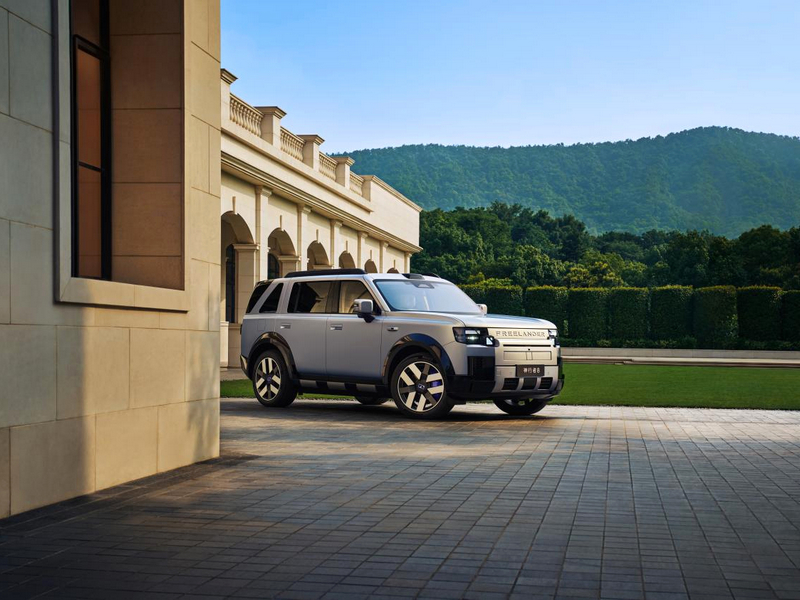
A New 3.0 Model for Automotive Joint Ventures
Traditional automotive joint ventures in China historically relied heavily on their foreign partners for core technologies and supply chains, while localization was largely concentrated on manufacturing and sales.
FREELANDER is attempting to move beyond that structure.
From vehicle design and engineering to core component production and global supply-chain development, the brand has established a much deeper level of localization.
The Chery Jaguar Land Rover plant in Changshu has been upgraded to support an 800V high-voltage architecture and a dedicated battery production line for new energy all-terrain vehicles. More than 90% of the vehicle engineering team consists of local engineers, while core areas including electric powertrain systems, intelligent cockpits and intelligent driving algorithms are under localized development and control.
The cooperation combines Jaguar Land Rover’s premium all-terrain design expertise and brand heritage with Chery’s new energy vehicle technologies and global supply-chain capabilities.
Rather than a one-way transfer of technology, the model represents deeper two-way co-development and could provide a new blueprint for the evolution of automotive joint ventures in China.
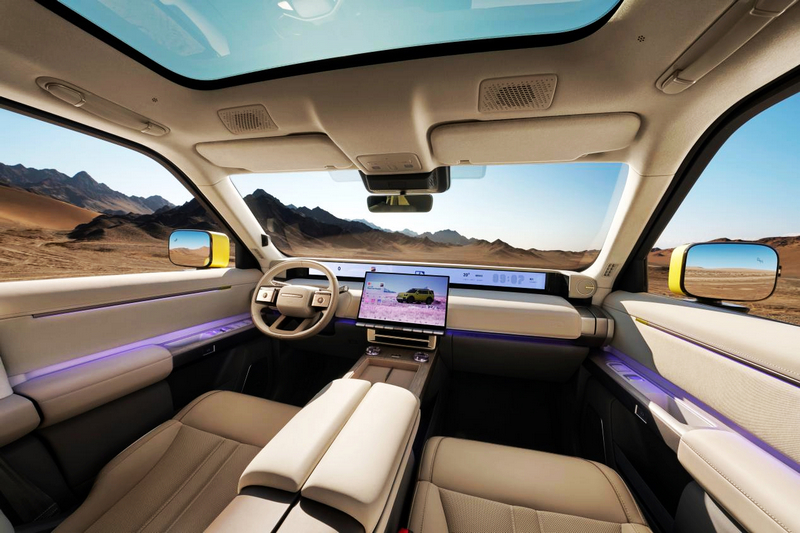
Targeting High-End Intelligent All-Terrain NEVs
FREELANDER is positioning itself in the differentiated market for premium intelligent all-terrain new energy vehicles, placing greater emphasis on technological value, product experience and full-scenario mobility rather than simply pursuing volume.
The FREELANDER 8 integrates technologies from Huawei, CATL and Qualcomm, combining advanced electrification with traditional all-terrain capability.
Its dedicated all-terrain battery system features additional protection designed specifically for off-road environments, while the vehicle’s broader electrical architecture is intended to support future advances in battery technology.
The model also features Huawei Qiankun ADS 5 across the range, together with an 896-line imaging LiDAR and binocular cameras designed to provide highly detailed terrain perception.
An i-ATS intelligent all-terrain system further combines new energy technology with conventional off-road engineering, allowing the vehicle to transition from traditional mechanical off-roading toward a more intelligent, electronically coordinated driving experience.
With this combination, the FREELANDER 8 aims to address the premium new energy off-road SUV segment priced between approximately RMB 300,000 and RMB 450,000.
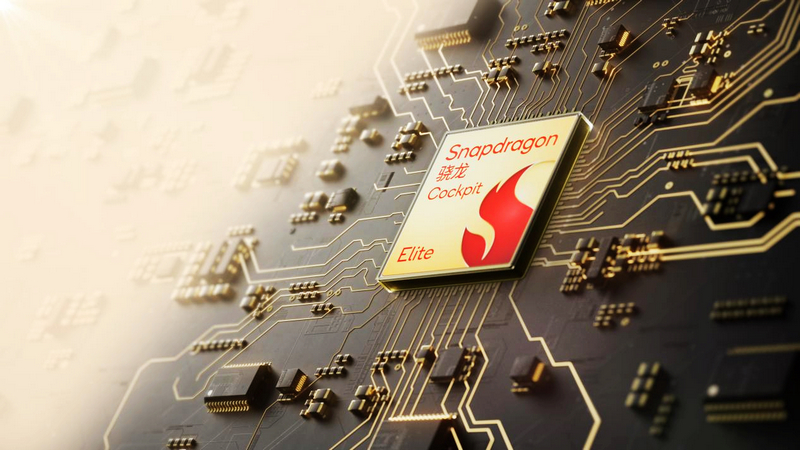
“Luxury Family SUV + Light Off-Roading”
In the short term, the FREELANDER 8 is targeting a clear gap in the current market.
Many mainstream six-seat new energy SUVs focus heavily on urban family use but provide limited off-road capability. At the opposite end, traditional hardcore off-road vehicles often sacrifice everyday comfort, cabin refinement and urban usability.
The FREELANDER 8 seeks to bridge these two categories through a “luxury family SUV + light off-road” positioning.
Its key technologies include:
- Qualcomm Snapdragon flagship cockpit platform
- Huawei Qiankun advanced driving assistance
- Dual-chamber air suspension
- Comprehensive all-terrain chassis hardware
- Six-seat family-oriented cabin layout
- Electrified powertrain technology designed for both urban and outdoor use
This combination is intended to attract customers replacing traditional premium gasoline-powered SUVs while offering greater flexibility for commuting, family travel and recreational driving.
Building a Full Product Portfolio
Over the medium term, FREELANDER plans to launch six models within five years, creating a broader product portfolio across multiple market segments.
The lineup is expected to cover:
- Range-extended electric vehicles
- Plug-in hybrid vehicles
- Battery-electric vehicles
- Multiple vehicle sizes
- Different premium price segments
The Chery Jaguar Land Rover Changshu manufacturing facility will provide localized production capability across the entire manufacturing chain, supporting both product quality and production capacity.
The brand also plans to establish 100 dedicated stores across 60 Chinese cities in 2026, creating a sales and after-sales network focused on major markets and strengthening customer awareness of the new brand.
From Vehicle Exports to Localized Global Operations
FREELANDER is also adopting a different approach to international expansion.
Instead of following a traditional path of exporting vehicles first and developing local operations later, the brand plans to make the Middle East its first strategic overseas market.
Over the next five years, FREELANDER aims to enter more than 90 countries and establish over 1,100 offline experience locations.
The objective is to move beyond simple vehicle exports toward localized sales, service and brand operations.
This approach reflects the broader globalization of China’s automotive industry, where international expansion is increasingly shifting from exporting products to building long-term local ecosystems.
China R&D and Global Brand Heritage Converge
Over the longer term, technologies such as dedicated all-terrain batteries and vehicle-to-grid (V2G) energy integration could extend FREELANDER’s value beyond conventional vehicle ownership.
Potential applications include mobile energy storage, outdoor energy services and broader vehicle-energy integration scenarios.
The transformation of FREELANDER from a traditional internal-combustion SUV nameplate into a new energy vehicle brand therefore represents more than a product update.
It reflects a broader restructuring of the joint-venture model in China—one in which international brand heritage is increasingly combined with China’s rapidly developing capabilities in electrification, intelligent driving, software and advanced manufacturing.
As more joint-venture brands shift toward technology co-development, value competition and global expansion, models such as the FREELANDER 8 could become important examples of how international automakers and Chinese partners redefine their roles in the new energy vehicle era.
 GEELY Debuts AI Off-Road Technology on Galaxy Battleship 700
 Global Automakers Expand China R&D to Power Worldwide Innovation


Bluetrip Motor Limited
 +86-21-6097-9318
 +86-21-6097-9318
 +86-187-2126-1510
+86-138-1769-0558

 Suite 5501, Shanghai Tower, No. 501 Yincheng Middle Road, Pudong New Area, Shanghai 200120, China